 Vero Door
Vero Door
Vero Door
A smart lock can make a garden or driveway gate more convenient, but rain changes the installation requirements. Many homeowners ask, “Can I use a smart lock on a gate that is exposed to rain?” The answer depends on the lock’s weather rating, construction, power system, and gate design. An indoor smart lock should never be assumed safe outdoors.
Check the manufacturer’s specifications carefully. Look for an IP rating, sealed electronics, rust-resistant materials, and an operating temperature range suited to your climate. A covered gate may still face wind-driven rain, morning condensation, and splashing water from the ground. Small details matter. Water can enter through cable openings, battery covers, or poorly fitted mounting plates.
The lock must also match the gate’s movement. A sagging wooden gate can prevent the bolt from aligning, while a metal gate may transfer cold and moisture directly to the mechanism. Install the lock away from obvious water paths, and use weatherproof cable protection where needed. Keep drainage clear. Test the latch after heavy rain, not only on a dry afternoon.
Professional installers typically recommend routine inspections for corrosion, loose screws, damaged seals, and weak batteries. However, even a well-rated lock may fail if installation instructions are ignored. I have seen outdoor projects focus on app features while overlooking basic gate alignment. That is an easy mistake to make. Choose a lock designed for outdoor gates, follow its maintenance guidance, and keep a dependable manual access option available.
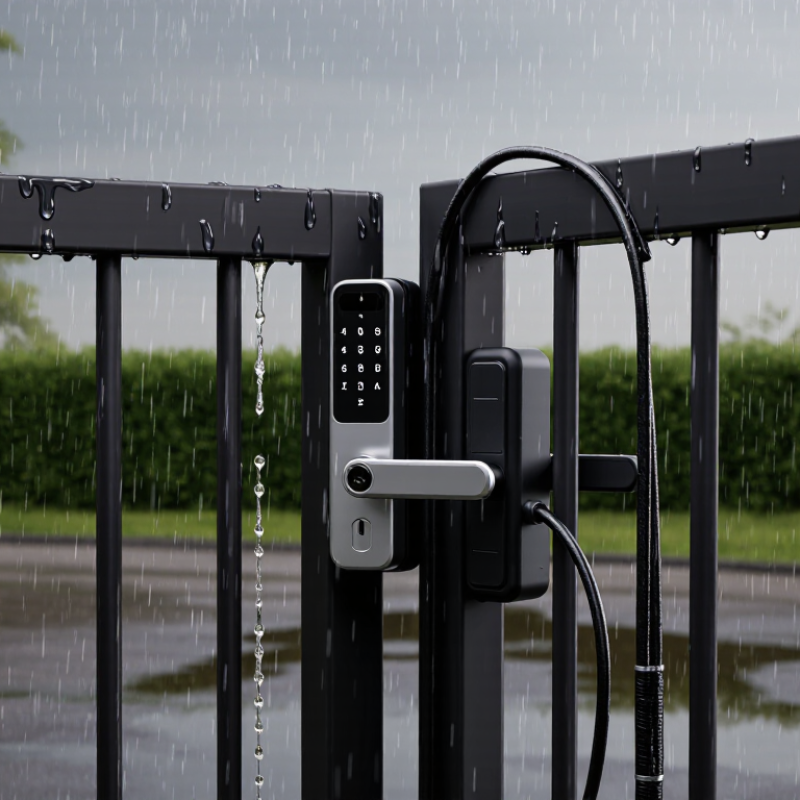
Rain can affect smart lock performance on outdoor gates in several ways. Water may enter the keypad, fingerprint reader, motor housing, or battery compartment. Even a short shower can create trouble when seals are damaged or poorly fitted. Rain changes that.
A lock’s water-resistance rating matters, but it is not the only protection. The gate should have a small cover that blocks direct rainfall without trapping humid air. Position the lock away from low points where water collects. Check the mounting holes, cable openings, and rubber seals after installation. Condensation can form inside the housing during cold nights, even when the outer surface looks dry. The battery may struggle. Wet contacts can also cause intermittent power, delayed unlocking, or false keypad responses.
I recommend testing the lock after heavy rain, not only during dry weather. Open and close the gate several times, then inspect the latch for grit, rust, or unusual resistance. A sheltered battery compartment and stainless hardware usually improve long-term reliability. Keep a clean mechanical key or approved backup method available, because electronics can fail at inconvenient times. I once underestimated wind-driven rain near a gate corner; the lock stayed powered, but moisture reached the keypad edge. That installation needed better shielding. Regularly dry exposed surfaces, replace cracked seals, and avoid spraying high-pressure water directly at the lock. Small details matter.
| Rain or Outdoor Condition | Likely Effect on a Smart Gate Lock | Water-Ingress Risk | Performance Factors to Check | Recommended Protection or Action |
|---|---|---|---|---|
| Light rain or brief showers | Most outdoor-rated locks should continue operating normally when correctly installed. Moisture may still collect around the keypad, fingerprint reader, keyway, or battery cover. | Low to moderate | Outdoor enclosure rating, drainage, cover design, and whether water can run directly into seams or openings. | Use a lock specifically rated for outdoor exposure. Install it under a small shield where possible and keep the battery compartment closed. |
| Continuous moderate rain | Repeated wetting can cause slower sensor response, temporary keypad or fingerprint-reading problems, and moisture accumulation around moving parts. | Moderate | Sealed buttons, membrane keypad, reader surface, cable glands, mounting orientation, and the condition of door or gate seals. | Position the lock so water drains away from the electronics. Wipe the reader when necessary and inspect seals and fasteners periodically. |
| Heavy rain, wind-driven rain, or splash from sprinklers | Water may reach the lock from several directions. Wind-driven spray can expose gaps that are not normally reached by vertical rainfall. | High | Ingress-protection rating, direct spray exposure, exposed cable connections, nearby irrigation, and the presence of a protective canopy. | Choose a higher-rated outdoor model, add a rain hood, route cables downward with a drip loop, and avoid mounting the lock in the direct path of sprinklers. |
| Standing water, puddles, or poor drainage at the gate | Water can enter from below, accelerate corrosion, contaminate the latch mechanism, and cause the gate to sag or become misaligned. | High | Lock height above ground, drainage around the post, metal corrosion protection, latch clearance, and gate movement after wet weather. | Keep the lock and electrical connections above splash level, improve drainage, use corrosion-resistant hardware, and maintain proper gate alignment. |
| IPX4 enclosure rating | Designed for protection against water splashing from all directions under the applicable test conditions. It is not a guarantee against prolonged exposure, flooding, or immersion. | Moderate in exposed locations | Whether the rating applies to the complete installed lock or only a specific component. Installation orientation can also affect protection. | Generally more suitable for sheltered outdoor locations than fully exposed gates. Use additional shielding in heavy or wind-driven rain. |
| IPX5 or IPX6 enclosure rating | Provides protection against water jets under the applicable test conditions. It can offer better resistance to exposed rain, but it does not address corrosion, impact, or poor installation. | Moderate, depending on exposure | Actual certification, cable entry protection, battery-cover seal, drainage, and exposure to pressure washing or strong spray. | Often a better choice for an exposed gate, provided the complete installation is sealed and the lock is not subjected to pressure washing beyond its rating. |
| IPX7-rated component or enclosure | Designed for temporary immersion up to the limits of the applicable test. This does not automatically mean the lock is suitable for permanent outdoor immersion or every type of rain exposure. | Depends on installation and adjacent components | Whether the rating covers the entire lock, wiring, power supply, and accessories. Check for water trapped inside the gate or post. | Use only when the manufacturer’s installation instructions support the intended outdoor application. Prevent standing water and inspect seals regularly. |
| Cold rain, frost, or freezing conditions | Water can freeze in the latch, keyway, or moving parts. Batteries may provide less power at low temperatures, and wet surfaces may reduce fingerprint-reader performance. | Moderate to high | Specified operating-temperature range, battery chemistry, freeze protection, latch lubrication, and drainage from the mechanism. | Use the recommended battery type, keep drainage clear, protect the mechanism from direct precipitation, and maintain a reliable mechanical backup entry method. |
| Rain combined with dust, salt air, or road spray | Moisture can combine with contaminants and increase corrosion on terminals, fasteners, hinges, and latch components. Salt deposits may be particularly damaging in coastal areas. | High over time | Material and coating quality, stainless or corrosion-resistant hardware, terminal protection, cleaning access, and local environmental exposure. | Rinse salt or grime with clean water when appropriate, dry the assembly, inspect for corrosion, and follow the maintenance instructions for the lock. |
| Rain-related Wi-Fi, Bluetooth, or power issues | Rain itself usually does not block short-range radio communication significantly, but wet walls, metal gates, distance, low batteries, and unstable power can cause intermittent access problems. | Usually indirect | Signal strength at the gate, gateway location, battery level, cable integrity, and whether the lock can operate locally without an internet connection. | Test connectivity in wet conditions, place the gateway within the recommended range, protect power connections, and keep a physical override or alternate access method. |
Yes, if the lock and gate are suitable for outdoor use. Check the published IP rating before installation. Rain alone is not the deciding factor. The keypad may have different protection from the lock body.
Look for a clearly stated outdoor rating. IPX4 protects against splashing water from different directions. IPX5 provides stronger protection against water jets. A Type 3R enclosure can help protect controllers from falling rain and ice.
Measure the gate, post, latch, and available clearance. The bolt should enter the strike plate smoothly. Close the gate several times during testing. A narrow frame may not provide enough space.
Yes. Metal gates may flex under pressure or wind. Wooden gates may swell after rain. Dropped hinges can shift the latch slightly. I once trusted a level gate, but pressure exposed a small alignment problem.
Install a small hood above the lock. Tilt the keypad slightly downward. Use the supplied gasket and an outdoor-rated cable gland. Keep drainage openings clear. Add a drip loop below each cable entry.
Not always. Silicone may look sealed while moisture collects behind it. Mechanical compression usually provides a more dependable seal. Inspect screws, gaskets, and cable openings after heavy storms. My earlier assumption was too optimistic.
Cold temperatures can reduce battery performance. Thick walls or metal fencing may weaken remote connections. Test the lock from the usual entry points. Carrying a manual backup method is sensible.
Test manual operation, electronic unlocking, and bolt alignment. Try it during light rain, not only in dry conditions. Check battery contacts every few months. Inspect for condensation, standing water, and salt buildup near coastal areas. Small checks matter.
Can I use a smart lock on a gate that is exposed to rain? Yes, but the lock must be designed for outdoor use and installed correctly. Rain can cause corrosion, short circuits, frozen mechanisms, and unreliable sensors if water enters the housing. Choose a weather-resistant model with strong sealing, suitable temperature tolerance, and protection for its power source. Before installation, check that the lock fits the gate’s material, thickness, alignment, opening direction, and available space. A secure fit is essential for smooth locking and unlocking.
To reduce water exposure, position the lock beneath a protective cover when possible, use sealed cable connections, and ensure that drainage paths remain clear. Avoid placing the keypad or electronic components where water can collect. Regular maintenance also supports reliable operation in wet weather: inspect seals, remove dirt and rust, replace worn batteries promptly, and test the lock after heavy rain. With suitable equipment, careful installation, and routine checks, a smart lock can provide dependable access control on a rainy outdoor gate.
