Vero Door Vero Door

How to Fix a Door Handle That Sticks in Cold Weather?

Time:2026-10-17 Author:Sienna
0%

Cold mornings can turn a simple doorway into a frustrating problem. You press the handle, feel resistance, and hear the latch scrape inside the door. The mechanism may work normally later, which makes the fault seem confusing.

Why is my door handle sticking in cold weather? Usually, freezing moisture, shrinking metal, or a swollen door frame creates extra pressure. Dirt and old lubricant can worsen the problem. In some cases, the handle is not frozen at all; the latch is simply misaligned against the strike plate. This distinction matters because forcing the handle can bend internal parts or damage the lock.

This guide explains how to inspect and fix a sticking door handle safely. You will learn how to check for ice, test the latch, and identify pressure around the frame. It also covers suitable lubricants and simple adjustments recommended by experienced locksmiths and hardware manufacturers. A hair dryer may loosen light frost, but open flames and aggressive heating can damage finishes or create hazards. Use gentle heat instead.

Small details matter here. Look for water along the lower edge, cracked weatherstripping, or a handle that feels loose. I have sometimes treated the handle before checking the frame, and that solved nothing. A rushed repair wastes time. Reliable troubleshooting starts with observation, patience, and the correct diagnosis. If the handle remains stuck, the lock feels damaged, or the door will not secure properly, contact a qualified professional.
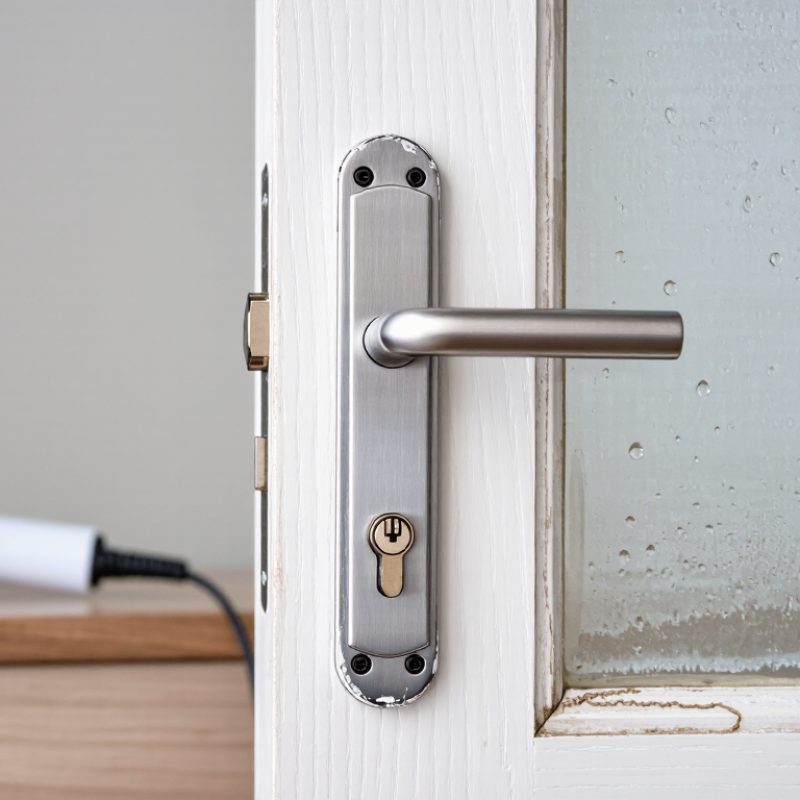
How to Fix a Door Handle That Sticks in Cold Weather?

Confirm Ice Formation: Water Freezes at 0°C

How to Fix a Door Handle That Sticks in Cold Weather?

When a door handle sticks, confirm ice formation before applying force. Water freezes at 0°C under standard atmospheric pressure. However, outdoor temperatures can feel warmer while moisture remains frozen inside narrow gaps. Check for frost around the handle base, latch edge, keyway, or mounting screws. A small thermometer can help, but visible crystals are often the clearest evidence.

I have found that wiping the handle first reveals hidden moisture. Press the handle gently and listen for a dry, brittle movement. Do not twist harder if the latch feels locked. Excessive force can bend internal parts or damage the door frame. Warm the area slowly with a low-heat dryer, keeping it several centimeters away. Never use an open flame. Avoid pouring boiling water over the handle, because the water may refreeze inside the mechanism.

After the ice melts, dry the handle, latch, and surrounding frame completely. Inspect where rain or melting snow enters. A thin layer of suitable lock lubricant may reduce future sticking, but follow the hardware instructions carefully. I once blamed the cold alone, yet moisture from a loose seal caused the problem. That mistake matters. If the handle still sticks above 0°C, freezing may not be the real cause. Thickened lubricant, misalignment, or worn internal parts could require professional inspection.

How to Fix a Door Handle That Sticks in Cold Weather?

Confirm Ice Formation: Water freezes at 0°C under standard atmospheric pressure.

When the door handle or nearby moisture reaches 0°C or below, water can freeze and cause sticking. Check the handle, lock, and surrounding surfaces for ice before applying a suitable de-icer or gently warming the area.

Check Metal Contraction: Steel Moves About 12 µm/m·°C

How to Fix a Door Handle That Sticks in Cold Weather?

A sticking handle may result from metal contraction, not a broken mechanism. Steel moves about 12 µm per metre for each 1°C temperature change. For a one-metre steel part facing a 30°C drop, that equals roughly 0.36 millimetres of movement. That tiny shift can change latch and strike-plate alignment. It can also make a tight handle feel surprisingly stiff.

I once found a winter door that worked perfectly indoors but dragged against its strike plate outside. I checked the screws, hinge alignment, and latch edge before applying lubricant. Slightly loosening the strike-plate screws helped, but this is not a universal fix. Temperature, door material, and installation pressure all matter. Do not force the handle, because the spindle or internal spring may bend. Open the door and test the handle separately. If it moves smoothly, the frame alignment is probably the real problem.

Tips: Measure the gap around the closed door on a cold morning. Look for fresh rubbing marks near the latch. Tighten loose hinge screws, then test the handle again. Use a dry lock lubricant where suitable, and keep water-based products away from exposed metal. If the handle remains stiff after alignment checks, have a qualified door technician inspect it. My estimate may be imperfect, especially on long metal parts, but it shows why a fraction of a millimetre can matter.

Warm the Latch Above 0°C Without Using Excessive Force

How to Fix a Door Handle That Sticks in Cold Weather?

A sticking handle often signals a frozen latch, not a broken handle. Water freezes at 0°C, the reference point used in the ASHRAE Handbook—Fundamentals. Check the latch edge with a small thermometer. If it reads below freezing, do not yank the handle. Excessive force can bend the spindle or damage the lock case. I learned this after forcing one during a morning frost. The handle moved, but the latch stayed trapped.

Warm the latch gradually above 0°C. Press a dry, warm cloth against the metal for several minutes. A household hair dryer can also help on a low setting, held about 15 centimetres away. Keep the airflow moving. The National Weather Service advises treating exposed metal carefully during freezing conditions, because cold surfaces can remain hazardous even when air temperatures rise. Do not use an open flame or pour boiling water over the door. Water may refreeze inside the mechanism.

Test the handle gently every thirty seconds. Stop when the latch retracts smoothly. Wipe away condensation immediately. A small amount of suitable lock lubricant may help afterward, following the product’s instructions. However, lubrication will not correct a swollen door, misaligned strike plate, or damaged spring. The U.S. Department of Energy’s Weatherization Field Guide emphasizes controlling drafts around doors; sealing gaps can reduce moisture entering the latch area. I would inspect the weather seal next. Cold weather exposes small installation problems quickly.

Apply Silicone Lubricant Rated for Temperatures Near −40°C

A sticking door handle often begins with moisture, not a broken spring. Cold air thickens old oil, while trapped water can freeze around the spindle or latch. Apply a silicone lubricant rated for temperatures near −40°C. That rating matters when overnight temperatures fall sharply.

Clean the handle, latch edge, and visible spindle with a dry cloth. Remove grit before spraying. Apply a small amount of silicone lubricant into the latch opening and around the spindle. Move the handle repeatedly to distribute it.

Do not flood the lock cylinder. Silicone reduces friction without attracting as much dust as heavy petroleum grease.

ASTM D1478 evaluates low-temperature starting torque in lubricated components. Its testing approach shows why low-temperature performance needs measurement, not guesswork. Check the lubricant’s technical data sheet for a stated operating range near −40°C. A general-purpose spray may remain liquid but still perform poorly in a frozen latch. That distinction is easy to miss.

The U.S. National Weather Service notes that −40°C and −40°F are equal, marking an unusually severe cold threshold. At that temperature, even a small amount of water can immobilize moving parts.

I have found repeated cycling more effective than one heavy application. Still, I sometimes over-apply lubricant on the first attempt. Wipe away the excess, then inspect the latch after the next cold night. If the handle still sticks, check door alignment before adding more lubricant.

Adjust Alignment and Test at Least 20 Complete Operating Cycles

A sticking door handle in cold weather often reflects alignment, not a broken mechanism.

As temperatures drop, wood can contract, while metal parts shift slightly. I once blamed the latch immediately, but the strike plate was rubbing against its edge.

Close the door slowly and watch the latch enter the strike opening. Look for scraped paint, tight contact, or a latch that rises instead of moving straight.

Loosen the strike plate screws slightly, then shift the plate by a small amount. Tighten each screw firmly, but do not crush the surrounding material. If the hinges feel loose, tighten them before changing the strike position. Work gently.

Apply a small amount of cold-weather-rated lubricant to the moving latch surfaces. Avoid flooding the handle mechanism.

Operate the handle and inspect the latch after each adjustment. The movement should feel smooth, with the latch fully retracting and extending without pressure on the door.

My first adjustment was too generous, and the latch later rattled, so tiny changes are safer.

Test at least 20 complete operating cycles. Each cycle should include turning the handle, opening the door, releasing the handle, and closing the door.

Check the door from different angles during testing. If resistance returns after several cycles, the alignment may still be marginal. Cold conditions can reveal problems that seem absent indoors.

Record what changed. That small note can prevent repeating the same adjustment next winter.

FAQS

How can I tell whether ice is causing the sticking?

Check for frost around the handle base, latch edge, keyway, and mounting screws. Visible crystals are useful clues. Wipe first. A small thermometer can confirm temperatures near 0°C.

What should I do before pulling a frozen handle?

Press the handle gently and listen for dry, brittle movement. Do not twist harder if the latch feels locked. Excessive force can bend internal parts or damage the frame. Stop there.

How can I warm the latch safely?

Press a dry, warm cloth against the metal for several minutes. Use a low-heat dryer from about 15 centimetres away. Keep the airflow moving. Never use an open flame.

Why should I avoid boiling water?

Boiling water may melt surface ice but refreeze inside the mechanism. This can trap the latch again. It may also create slippery water near the doorway.

How do I know when the latch has thawed?

Test the handle gently every thirty seconds. Stop when the latch retracts smoothly and fully. Dry condensation immediately. A warm handle is not enough if movement remains rough.

What if the handle still sticks above 0°C?

Freezing may not be the real cause. Thickened lubricant, a swollen door, loose hinges, or worn internal parts may be involved. I once blamed cold alone. That diagnosis was wrong.

How can I check the door’s alignment?

Close the door slowly and watch the latch enter the strike opening. Look for scraped paint or tight contact. Tighten loose hinges first. Shift the strike plate only slightly.

How many times should I test an adjustment?

Complete at least 20 operating cycles. Turn the handle, open the door, release it, and close the door each time. Check several viewing angles. Tiny adjustments are safer.

Conclusion

Why is my door handle sticking in cold weather? The most likely causes are ice formation, metal contraction, or both. Water freezes at 0°C, so moisture inside the latch or around the handle can quickly become ice. Steel also contracts by approximately 12 µm per meter for every 1°C drop in temperature, which may slightly change the alignment between the handle, latch, and strike plate.

Begin by checking for visible ice and gently warming the latch until it rises above 0°C. Avoid excessive force, since pulling or twisting too hard can damage the mechanism. Once the parts are dry, apply a silicone lubricant rated for temperatures near −40°C to keep the latch moving smoothly. If the handle still sticks, inspect and adjust its alignment carefully. Finally, test the door through at least 20 complete opening and closing cycles to confirm that the handle operates reliably in cold conditions.

Sienna

Sienna

Sienna is a skilled marketing professional with a deep expertise in our company’s core products and services. With a passion for innovation and detail, she plays a pivotal role in crafting insightful blog posts that not only highlight the unique features of our offerings but also provide valuable......