Vero Door Vero Door

2026 Best Hurricane Proof Doors for High Wind Zones?

Time:2026-09-17 Author:Madeline
0%

What makes a door hurricane-proof in high-wind zones? The answer begins with tested performance, not marketing language. A reliable hurricane door must resist wind pressure, flying debris, rain intrusion, and repeated impact. ASTM E1886 and ASTM E1996 establish recognized impact-testing procedures for exterior openings. Florida’s TAS 201, TAS 202, and TAS 203 standards also evaluate impact resistance, pressure performance, and water penetration. These details matter when wind pushes against a door like a heavy truck.

The National Oceanic and Atmospheric Administration reports that tropical cyclones have caused hundreds of billions of dollars in United States losses since 1980. FEMA’s wind-resistant design guidance repeatedly stresses the importance of protecting building openings. The Insurance Institute for Business & Home Safety adds practical field evidence through its FORTIFIED construction research. Tim Reinhold, former chief engineer at IBHS, has said, “A house is a system, and all of the parts have to work together.” A strong door cannot compensate for weak hinges, poor anchoring, or a damaged surrounding wall.

Our 2026 review focuses on doors designed for high-wind zones, including impact-rated glass, reinforced frames, multi-point locks, and corrosion-resistant hardware. Certification labels deserve careful attention. Some products appear impressive but lack complete testing records. That is an uncomfortable detail. Installation quality can decide whether a tested door performs during a real storm. Therefore, this guide compares documented ratings, materials, warranties, and installation requirements. It also considers everyday use, because a door that feels secure but sticks after rain is not a complete solution. No product is invincible. Proper selection, installation, and maintenance remain essential.
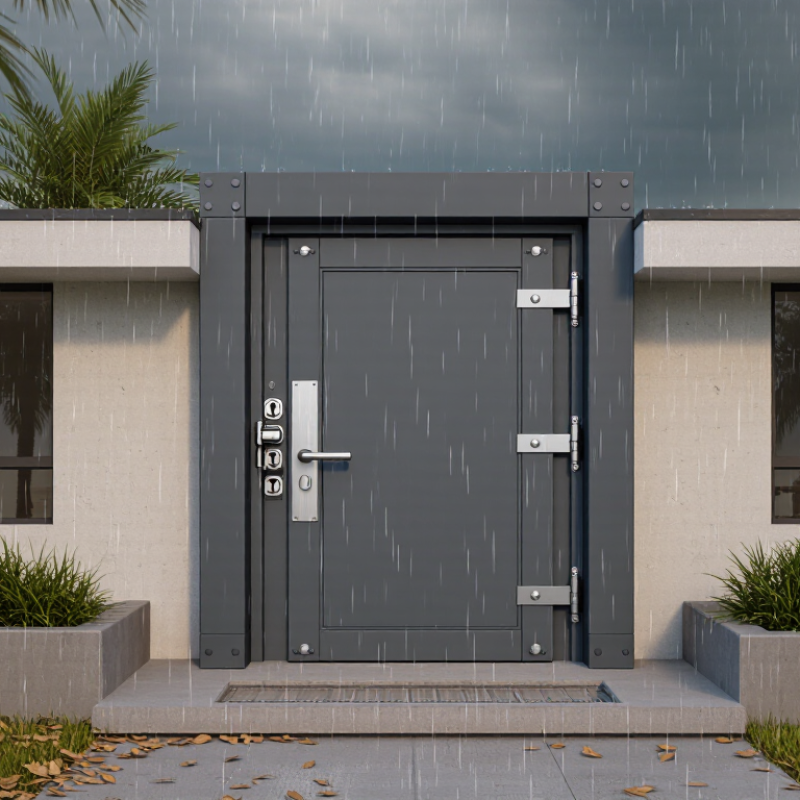
2026 Best Hurricane Proof Doors for High Wind Zones?

What Makes a Door Hurricane-Proof in High-Wind Zones

A hurricane-proof door is more than a heavy slab with a strong appearance. It is a tested door assembly, including the panel, frame, hinges, locks, glass, and anchors. High-wind performance depends on how these parts work together under pressure. One weak connection can compromise the entire opening.

Impact-resistant glass helps prevent flying debris from creating a breach. Reinforced frames transfer wind loads into the surrounding wall. Multi-point locks reduce movement along the door edge. The anchoring pattern matters greatly, especially in masonry or older structures. Look for documented pressure and impact testing that matches your local wind zone. A label alone is not enough.

Installation deserves equal attention. An experienced installer should inspect wall condition, fastener spacing, sill drainage, and the threshold seal. Small gaps can admit wind-driven rain. Poor alignment may prevent locks from engaging fully. Even a certified door can underperform when the opening is weak or incorrectly prepared. I would also question vague claims such as “storm rated” without test standards or approved pressure values. Specifications can be confusing, and no door is invulnerable. In real projects, budget limits sometimes force compromises, so the surrounding wall and nearby openings should be reviewed before choosing a door.

2026 Best Hurricane-Proof Doors for High-Wind Zones

What Makes a Door Hurricane-Proof in High-Wind Zones?

The chart shows approximate velocity pressure calculated with the commonly used formula q = 0.00256V², where V is wind speed in miles per hour and q is pressure in pounds per square foot. In high-wind zones, hurricane-resistant doors are typically evaluated for structural strength, impact resistance, water infiltration, and pressure cycling under applicable building-code testing such as ASTM E1886/E1996. Actual door requirements depend on the building site, exposure, opening size, height, local code, and design pressure calculations.

Key Standards and Ratings for Hurricane-Resistant Doors

2026 Best Hurricane Proof Doors for High Wind Zones?

In high-wind areas, a hurricane-resistant door is judged by tested performance, not thick appearance. Look for assemblies tested under ASTM E1886 and ASTM E1996. These standards evaluate impact resistance and repeated wind-pressure cycles. Large-missile testing uses heavy projectiles, often representing roof debris. Small-missile testing addresses lighter debris in protected locations. The required level depends on your building’s height, exposure, and local code.

Florida projects may also require TAS 201, TAS 202, and TAS 203 testing. These cover impact, pressure, and water infiltration performance. A design-pressure rating, often shown as DP, indicates the pressure the assembly can resist. It is not a universal hurricane score. Ask for the exact rating, test report, and approval number. Confirm whether the rating covers the complete door, frame, glass, hardware, and threshold.

Installation deserves equal attention. A certified door can perform poorly when anchors miss structural framing. I have seen small gaps around thresholds become obvious during wind-driven rain. Check fastener spacing, wall conditions, sealant joints, and drainage paths before installation. Local officials should verify the required wind pressure using current building codes and site-specific calculations. Ratings can be confusing. That is normal. Even experienced buyers should question unclear documents, because a strong-looking door may still lack the tested assembly needed for the home.

Types of Doors Designed for Extreme Wind and Impact

2026 Best Hurricane Proof Doors for High Wind Zones?

In high-wind zones, a door must resist pressure, flying debris, water, and repeated flexing. Impact-rated entry doors often use reinforced fiberglass or steel skins around a strong core. Their frames matter equally. Thick anchors, corrosion-resistant fasteners, and continuous hinges help transfer wind loads into the wall. A heavy door alone is not enough. Not even close.

For patios, impact-rated sliding doors combine laminated glass with reinforced aluminum or composite frames. Look for multi-point locks and tested rollers that prevent the panel from lifting. Large glass areas need careful installation because small gaps can invite wind-driven rain. Garage doors require different protection. Reinforced steel panels, stronger vertical tracks, and wind-load bracing help prevent the door from bowing inward. A garage door can fail dramatically.

In coastal homes, steel entry doors offer strength, while fiberglass doors resist moisture and everyday swelling. Wood can perform well, but it needs precise sealing and regular inspection. Certification should show tested pressure, missile impact, and water resistance for the intended opening size. Local building requirements still control the final choice. Field inspections often reveal a practical problem: the door is rated, but the surrounding wall is weak. Installation errors can defeat excellent materials. I would also question oversized decorative glass, exposed hinges, and unverified hardware. Strong design is useful, but detailed testing matters more.

2026 Best Hurricane Proof Doors for High Wind Zones? - Types of Doors Designed for Extreme Wind and Impact

Comparison of door systems commonly specified for hurricane-prone and high-wind regions. Final selection should be based on the project’s required design pressure, opening size, exposure category, and local building code.
Door Type Typical Construction Wind and Impact Capability Best-Fit Applications Relevant Testing or Code References Main Advantages Important Limitations
Impact-Rated Exterior Entry Door Reinforced steel or fiberglass door leaf, heavy-duty frame, multi-point locking hardware, and impact-rated glazing where included. Strong choice for windborne-debris regions when the complete door assembly is tested and approved for the required design pressure. Residential entrances, apartment buildings, hotels, schools, and small commercial buildings. May be tested for structural performance under ASTM E330 and for windborne debris resistance under ASTM E1886 and ASTM E1996. Regional approvals may also be required. Good balance of security, weather resistance, appearance, and everyday usability. Fiberglass options resist corrosion and denting better than many thin metal skins. Performance depends on the entire assembly, including frame, hinges, locks, threshold, fasteners, and wall attachment. A door leaf alone is not a complete certification.
Heavy-Duty Steel Door and Frame Steel door leaf with reinforced cores, welded or reinforced steel frame, commercial-grade hinges, and multiple locking points. Provides high structural stiffness and is suitable for many high-wind commercial openings when engineered and tested as a complete assembly. Utility rooms, service entrances, mechanical rooms, warehouses, multifamily buildings, and commercial facilities. Common performance evaluations include ASTM E330 for structural loading, ASTM E331 for water penetration, and applicable local high-wind approval requirements. High durability, strong security, fire-rated options, and compatibility with commercial hardware. Standard steel doors are not automatically impact-rated. Corrosion protection is important in coastal environments, and heavy components require accurately reinforced wall construction.
Impact-Rated Aluminum-Framed Glass Door Aluminum framing with laminated or insulating impact-resistant glazing, reinforced mullions, heavy-duty pivots or hinges, and weather seals. Can provide excellent daylight and impact protection when the glazing, frame, hardware, and anchorage are tested together. Storefronts, offices, restaurants, schools, condominium common areas, and entrances requiring visibility. Common evaluation areas include ASTM E1886 and ASTM E1996 for impact resistance, ASTM E330 for structural performance, and ASTM E331 for water penetration. Lightweight compared with many steel systems, corrosion-resistant when properly specified, and suitable for large glazed areas. Glass and framing systems may have lower allowable sizes than non-glazed doors. Mullions, anchors, and surrounding walls must be designed for the same wind pressure.
Rolling Hurricane-Resistant Door or Shutter Interlocking metal slats or a rated curtain, side guides, bottom bar, barrel, hood, and manually operated or motorized drive system. Designed to resist high wind pressure and, in selected assemblies, windborne debris. Some products are intended to protect doors or windows rather than provide daily pedestrian access. Retail openings, loading areas, garages, service counters, industrial buildings, and protective closures for windows or doors. Performance is product-specific and may involve ASTM E330, ASTM E1886/E1996, Florida-specific testing protocols, or local approval documentation. Compact when open, useful for large openings, and available with backup operation for power interruptions. Not all rolling shutters are impact-rated. Guides and end locks must remain properly secured, and motorized systems require inspection and maintenance after severe weather.
Wind-Rated Sectional Garage Door Insulated or non-insulated horizontal panels, reinforced vertical tracks, heavy-duty hinges and rollers, end stiles, and wind-load bracing. Can resist substantial wind pressure when supplied with the correct reinforcement package and installed for the specified opening size and design pressure. Attached garages, detached garages, fire stations, service bays, and light-industrial vehicle entrances. Evaluation is commonly based on the manufacturer’s tested wind-load design, local building-code requirements, and applicable garage-door industry standards. Convenient vehicle access, improved insulation options, and availability in different wind-load packages. Wind performance varies significantly by door width, height, track configuration, bracing, and anchorage. A standard garage door may fail if upgraded reinforcement is not included.
High-Speed Fabric or Flexible Industrial Door Flexible reinforced curtain, side columns, bottom edge system, wind bars or retention guides, and high-speed motorized operation. Useful for controlled industrial environments, but generally not a substitute for a tested impact-rated exterior door or storm shutter unless specifically approved for that purpose. Interior industrial separation, warehouses, food-processing areas, loading zones, and facilities where rapid opening is important. Performance is highly product-specific. Verify documented wind-load, retention, impact, pressure, and emergency-release testing before using one at an exterior opening. Very fast operation, reduced air exchange, and low space requirements compared with rigid doors. Many flexible doors are not intended to resist hurricane debris or extreme exterior wind pressure. They may require a separate storm-rated closure for exterior protection.
Blast- and Impact-Resistant Steel Security Door Reinforced steel leaf, steel frame, heavy-duty hinges, multi-point locking system, and specialized cores or glazing. Can offer strong resistance to forced entry and impact; wind performance must still be verified through a project-specific structural test or engineering evaluation. Critical infrastructure, government facilities, emergency operations centers, data facilities, and high-security commercial buildings. May involve ASTM E330 for structural loading, forced-entry testing, fire testing, or project-specific engineering. Blast resistance and hurricane resistance are separate performance categories. High security, durable construction, and compatibility with access-control systems. Blast-rated or security-rated does not automatically mean hurricane-rated. These systems can be heavy, expensive, and demanding on hinges, frames, and supporting walls.
Storm Shelter or Safe-Room Door Heavy steel door and frame with multiple locking points, reinforced hinges, protected hardware, and a frame designed for substantial anchorage. Designed for life-safety protection in designated shelter applications when tested and installed according to the applicable shelter standard. Community storm shelters, schools, emergency facilities, and residential safe rooms. ICC 500 applies to storm shelters and safe rooms. It is not a universal rating for ordinary exterior doors or routine building entrances. High level of occupant protection and robust hardware for emergency conditions. Usually heavier and less convenient for everyday traffic. Installation, anchorage, clearances, and maintenance must follow the approved shelter design.
Selection note: “Hurricane-proof” is commonly used in marketing, but no door is universally resistant to every storm condition. Confirm the complete assembly’s approved design pressure, impact classification, water resistance, opening dimensions, installation details, and local code compliance. ASTM E1886/E1996 impact testing, ASTM E330 structural testing, and regional requirements such as Florida high-wind protocols address different aspects of performance.

How to Choose the Best Hurricane-Proof Door for Your Property

Choosing the best hurricane-proof door starts with your property’s wind exposure, not its appearance.
Coastal homes may face flying debris, storm surge, and sudden pressure changes. Check your local building code and required design pressure rating before comparing door styles. A door tested for high winds should have documented impact resistance, strong hinges, reinforced frames, and secure locking points.

Look closely at the entire door assembly. The slab, frame, glass, hinges, threshold, and fasteners must work together. Impact-rated glass can reduce the risk of broken openings during a storm. Multi-point locks usually distribute pressure better than one central latch. A tight threshold also helps limit wind-driven rain, although no door prevents every leak.

Installation deserves equal attention. An excellent door can fail when the frame is poorly anchored into weak masonry or damaged wood. Ask for installation details, approved fasteners, test reports, and maintenance instructions. Measure the opening carefully, especially around uneven floors and older walls. Small gaps matter.

Inspect hinges, seals, and locks before each hurricane season. Replace cracked weatherstripping promptly. Do not rely on a door’s heavy weight alone. It may feel solid but lack verified testing. This is an easy mistake to make. A qualified local installer can assess structural conditions and explain whether the selected assembly matches your home’s exposure. Also consider emergency operation, since a secure door should not become difficult to open when power or visibility is limited.

Installation, Maintenance, and Long-Term Performance Considerations

In high-wind zones, a hurricane-rated door performs only as well as its installation. Choose a door tested for the wind pressure and impact requirements of your location. Ask for test reports, approval numbers, and compatible hardware. A qualified installer should inspect the rough opening before ordering. Uneven masonry, weak framing, or corroded anchors can undermine an expensive assembly. I have seen small gaps around a threshold become noisy, wet trouble during storms. The details matter.

Installation should follow the approved instructions, not a convenient shortcut. Fastener type, spacing, embedment, and sealant depth all affect resistance. The frame must remain square while anchors are tightened. Use shims that will not compress over time. Check the sill for drainage, especially where wind-driven rain is common. After installation, open and close the door several times. It should latch without force. A pressure test or field inspection may reveal problems that a visual check misses.

Maintenance is simple, but it is easy to postpone. Inspect hinges, locks, weather seals, glass, and exposed fasteners twice a year. Replace cracked seals and remove rust before it spreads. Keep the sill clear of sand, leaves, and paint buildup. Do not drill new holes or change hardware without confirming compatibility. Long-term performance also depends on building movement and repeated storms. A door can remain attractive while its seal weakens. That is an uncomfortable reminder. Record inspections, repairs, and unusual stiffness. Those notes help identify gradual failure before the next warning arrives.

FAQS

What makes a door suitable for high-wind zones?

It is a tested assembly, not merely a heavy door panel.

Why is impact-resistant glass important?

It helps resist flying debris during severe storms.

Should I trust a label saying “storm rated”?

Not by itself.

How does installation affect door performance?

Poor installation can weaken even a well-tested door.

What features help reduce wind movement?

Reinforced frames transfer loads into the surrounding wall.

What should I check around the threshold?

Check the seal, drainage path, alignment, and floor condition.

How often should a high-wind door be inspected?

Inspect the hinges, locks, seals, glass, and exposed fasteners twice each year.

Can building condition affect a door’s performance?

Yes.

Should emergency operation influence the selection?

Yes, a secure door should still open when power or visibility is limited.

Can a high-wind door lose performance over time?

Yes, seals can weaken while the door still looks attractive.

Conclusion

What makes a door hurricane-proof in high-wind zones? It is the combination of impact resistance, structural strength, secure hardware, weatherproof seals, and tested performance under extreme wind pressure. The best doors are designed to resist flying debris, forced entry caused by pressure changes, wind-driven rain, and repeated storm exposure. Look for products that meet recognized impact-testing requirements, carry appropriate wind-load ratings, and comply with local building codes for your region.

When choosing a hurricane-resistant door, consider the property’s location, opening size, exposure level, material, glass protection, locking system, and energy-efficiency needs. Reinforced steel, fiberglass, and specially engineered composite doors can provide reliable protection when correctly specified. Professional installation is equally important because even a strong door may fail if the frame, anchors, threshold, or surrounding wall is not properly secured. Regularly inspect seals, hinges, locks, fasteners, and drainage paths, and repair damage promptly to maintain long-term performance and protection.

Madeline

Madeline

Madeline is a dedicated marketing professional with a wealth of expertise in our company's core offerings. With a keen understanding of the industry, she brings a unique perspective to her role, consistently delivering high-quality content that highlights the superior aspects of our products. As......